
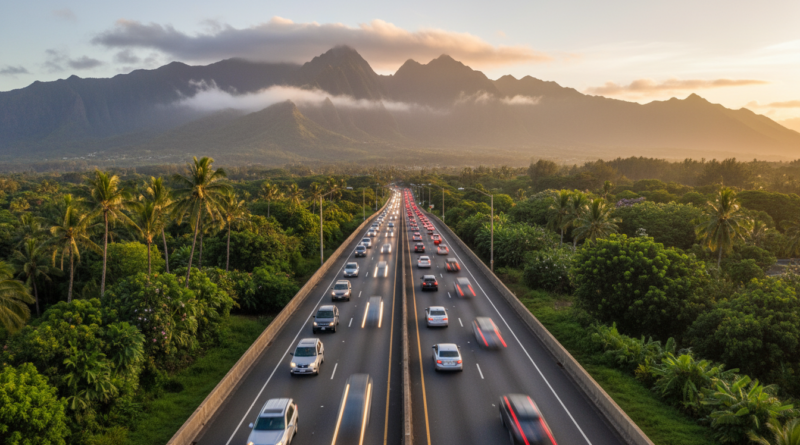
North Kalaheo Bridge Contraflow Returns Monday After Kailua Residents Push Back
The City and County of Honolulu will reinstate the contraflow lane on North Kalaheo Avenue Bridge starting Monday morning, responding to sustained pressure from Kailua residents who say the temporary removal has created dangerous traffic backups and longer commute times.
The contraflow system, which allows morning traffic to use both lanes heading toward Honolulu, was suspended three weeks ago as part of ongoing bridge rehabilitation work. The move immediately drew complaints from residents who depend on the system to navigate what’s already one of Oahu’s most notorious traffic bottlenecks.
“We’ve seen cars backed up all the way to the Kailua Road intersection during morning rush hour,” said Maria Santos, a Lanikai resident who commutes daily to her job in downtown Honolulu. “What used to be a 45-minute drive has turned into an hour and a half on some days. It’s simply not sustainable for working families.”
The North Kalaheo Bridge, built in 1963, serves as a critical link between the Kailua-Lanikai area and the rest of Oahu. During peak morning hours, the contraflow system typically handles about 2,400 vehicles per hour heading toward Honolulu, according to city traffic data.
Community Mobilizes for Change
Kailua residents organized quickly after the contraflow suspension, flooding city council meetings and launching a petition that gathered more than 800 signatures in just two weeks. The Kailua Neighborhood Board unanimously passed a resolution calling for immediate restoration of the traffic pattern.
Local business owners joined the chorus of complaints, reporting that employees were arriving late to work and customers were avoiding the area during morning hours. Several restaurants along Kailua Road said they noticed a drop in breakfast traffic from commuters who typically stop before heading into town.
The bridge rehabilitation project, which began in February and is scheduled to continue through August, includes structural repairs to the 61-year-old span and upgrades to safety railings. City officials initially said the contraflow suspension was necessary to ensure worker safety during concrete work on the bridge deck.
However, project managers have now developed modified work schedules that allow the contraflow system to operate during peak morning hours while maintaining safety protocols for construction crews.
Traffic Impact Beyond Kailua
The contraflow suspension’s effects rippled beyond the immediate Kailua area, with increased traffic reported on alternate routes including Kamehameha Highway through Kaneohe and the Pali Highway. Morning commute times from windward Oahu communities saw increases of 15-20 minutes on average, according to traffic monitoring apps.
City Transportation Services Director Lisa Chang acknowledged the community’s concerns in a statement Friday. “We understand the critical role this contraflow system plays in daily life for Kailua residents,” Chang said. “Our team worked diligently to find a construction approach that allows us to complete necessary safety improvements while minimizing traffic disruption.”
The restored contraflow will operate Monday through Friday from 6 a.m. to 8:30 a.m., the same schedule that was in place before the suspension. However, residents should expect some delays during construction periods, with city officials warning that brief traffic holds may be necessary when concrete trucks access the work site.
Looking Ahead
The bridge project represents part of a larger infrastructure investment on Oahu’s windward side, with similar rehabilitation work planned for the Kaneohe Bay Drive bridge and several smaller spans along Kamehameha Highway over the next three years.
City officials say lessons learned from the Kailua community response will inform how future construction projects balance infrastructure needs with traffic flow. The department is developing new protocols for community engagement before major traffic pattern changes.
For now, Kailua residents are celebrating what many see as a rare victory in their ongoing battles with traffic congestion. The successful push demonstrates how organized neighborhood advocacy can influence city policy, even on complex infrastructure projects.
Commuters should allow extra time Monday morning as traffic patterns readjust to the restored contraflow system. The city recommends using alternate routes during the first few days as drivers reacclimate to the traffic pattern.