
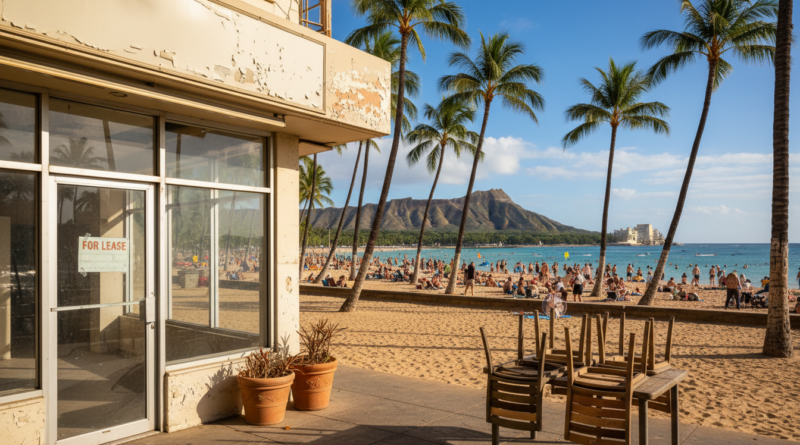
Waikiki’s Tourism Slump Is Getting Harder to Ignore — Even When the Beaches Are Packed
The beaches are crowded, the hotels look busy, but don’t let the surface tell the whole story. Waikiki’s tourism industry is facing a financial reality that state Rep. Adrian Tam says can no longer be swept under the proverbial beach towel.
Tam, who represents the tourism-heavy district that includes Waikiki and portions of Ala Moana, recently highlighted a troubling disconnect: while visitor arrivals to Hawaii show modest growth on paper, the actual dollars flowing into local businesses tell a different tale.
“We’re seeing people come, but they’re not spending like they used to,” Tam said in a recent interview. “The mom-and-pop shops, the local tour operators, the restaurants off the main drag — they’re all feeling it.”
The numbers paint a complex picture. According to Hawaii Tourism Authority data, visitor arrivals have shown marginal increases in recent quarters, but per-visitor spending has declined significantly compared to pre-pandemic levels. When adjusted for inflation, the spending power of today’s tourists falls even shorter of supporting the local economy that depends on their dollars.
Beyond the Beach Umbrellas
Walk down Kalakaua Avenue on any given afternoon, and you’ll see the usual suspects: tourists snapping photos, street performers drawing crowds, and the familiar hum of activity. But venture just one block makai or mauka, and a different story emerges.
Small businesses that have anchored Waikiki’s local character for decades are struggling to adapt to visitors who are increasingly budget-conscious. The shift toward shorter stays, more cautious spending, and a preference for chain establishments over local businesses has created ripple effects throughout the community.
Local tour companies report that while bookings remain steady, customers are opting for shorter, less expensive excursions. Restaurants that once relied on visitors trying new experiences are seeing tourists stick to familiar, often cheaper, dining options.
The housing crisis adds another layer of complexity. Many service workers who keep Waikiki running — from housekeepers to restaurant staff — are finding it increasingly difficult to afford living anywhere on Oahu, let alone near their workplace.
The Workforce Reality
Tam points to employment data that reveals the human cost of reduced tourism spending. While unemployment in the hospitality sector remains relatively low, many workers are taking on multiple jobs or working increased hours to maintain their previous income levels.
“It’s not just about whether people have jobs,” Tam explained. “It’s about whether those jobs can support a family, can help someone afford rent, can provide the stability our community needs.”
The challenge is particularly acute for businesses that employ local residents. Unlike large hotel chains that can absorb temporary revenue dips, small operators often lack the financial cushion to weather extended periods of reduced customer spending.
Local business owners report that customers are more price-sensitive than ever, leading to increased pressure to cut costs — often through reduced staffing or delayed maintenance and improvements.
Looking for Solutions
Tam has been working with community organizations and business groups to identify potential solutions. Ideas range from targeted marketing campaigns that emphasize Waikiki’s local businesses to policy changes that could help small operators compete more effectively.
One proposal gaining traction involves creating incentive programs that encourage visitors to explore beyond the major hotel and retail chains. Another focuses on supporting local businesses through streamlined permitting processes and reduced regulatory barriers.
The representative also emphasizes the importance of sustainable tourism practices that benefit both visitors and residents. “We want people to come and have a great experience,” he said. “But we also need that experience to support our community.”
Community leaders are also exploring ways to diversify Waikiki’s economic base while maintaining its appeal to visitors. This includes supporting local entrepreneurs, encouraging innovation in hospitality services, and fostering businesses that serve both tourists and residents.
As Hawaii’s tourism industry continues to evolve in a post-pandemic world, Waikiki finds itself at a crossroads. The question isn’t whether tourists will keep coming — the beaches and sunshine aren’t going anywhere. Instead, the challenge lies in ensuring that their presence translates into meaningful economic benefits for the people who call this island home.
For residents and businesses in Waikiki, the coming months will be crucial in determining whether the tourism industry can adapt to new realities while preserving the economic vitality that has long sustained this iconic neighborhood.