Local Filmmaker’s Documentary on Hawaiian Sovereignty Premieres at Film Festival
Kauaʻi-born filmmaker Leilani Santos will see her three-year passion project come to fruition this weekend when “Voices of the ʻĀina” premieres at the Hawaiʻi International Film Festival. The documentary explores the ongoing Hawaiian sovereignty movement through intimate portraits of Native Hawaiian activists, educators, and cultural practitioners across the islands.
Santos, who grew up in Hanalei before moving to Honolulu to study film at the University of Hawaiʻi, spent countless hours documenting community meetings, cultural ceremonies, and one-on-one conversations with sovereignty advocates. Her 85-minute film weaves together personal stories with historical context, examining how the 1893 overthrow of the Hawaiian Kingdom continues to impact Native Hawaiian communities today.
“I wanted to move beyond the headlines and show the human faces behind this movement,” Santos said during a recent interview at her Kaimukī studio. “These aren’t just political activists — they’re parents, teachers, farmers, and artists who carry the responsibility of preserving our culture and fighting for our people’s future.”
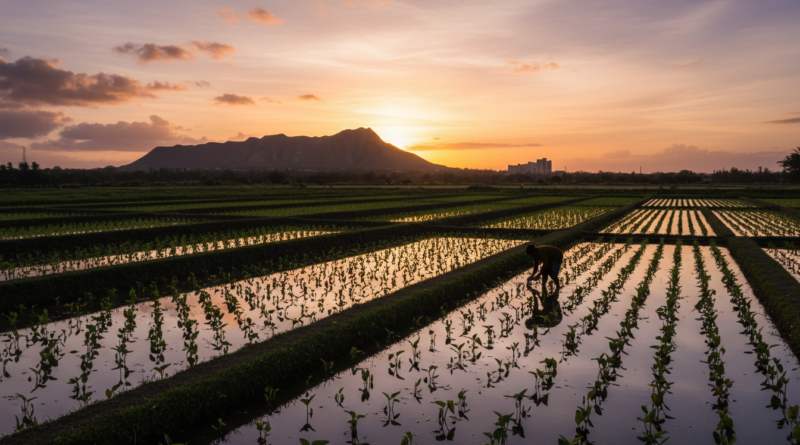
The documentary features interviews with prominent sovereignty advocates including Dr. Haunani-Kay Trask, Walter Ritte, and several members of the Native Hawaiian Roll Commission. Santos also captures quieter moments: a kūpuna teaching traditional fishing practices at He’eia State Park, students learning ʻōlelo Hawaiʻi at Kamehameha Schools, and families maintaining lo’i kalo in Waiʻanae Valley.
Years in the Making
Santos began filming in 2021 after receiving a grant from the Native Arts and Cultures Foundation. The project evolved as she gained access to previously unreported community gatherings and built trust within activist circles often wary of outside documentation.
“The sovereignty movement isn’t monolithic,” Santos explained. “There are different approaches, different visions for what Hawaiian self-determination should look like. I tried to represent that complexity honestly.”
The film includes archival footage from the 1978 Constitutional Convention, the 1993 Apology Resolution, and more recent events like the Thirty Meter Telescope protests on Maunakea. Santos balances historical context with contemporary struggles over land rights, cultural preservation, and political representation.
Cinematographer Kaleo Griffith, a longtime collaborator who also worked on the acclaimed “Kuleana,” helped Santos capture the natural beauty of locations from Waimea Canyon to Haleakalā crater. The film’s score, composed by Honolulu musician Raiatea Helm, incorporates traditional Hawaiian instruments alongside contemporary arrangements.
Festival Recognition
HIFF programmer Sarah Kim selected “Voices of the ʻĀina” for the festival’s Pacific Showcase, which highlights films made by or about Pacific Island communities. The documentary will screen Saturday at the Hawaiʻi Theatre Center and Sunday at Ward Village’s consolidated theaters.
“Leilani has created something really special here,” Kim noted. “This film provides essential education about Hawaiian history while centering Native Hawaiian voices in their own story. It’s exactly the kind of locally-made content we want to celebrate.”
Santos plans to submit the documentary to additional film festivals on the mainland, with hopes of securing distribution for educational and community screenings. She’s already fielding requests from Hawaiian studies programs and cultural organizations across the Pacific.
Beyond festival screenings, Santos envisions “Voices of the ʻĀina” serving as an educational tool in schools and universities. She’s developing a companion curriculum with UH’s Center for Hawaiian Studies that could be implemented in social studies and Hawaiian studies courses statewide.
Looking Ahead
The documentary arrives as discussions about Hawaiian sovereignty gain renewed attention following recent federal recognition debates and ongoing legal challenges to state land policies. Santos hopes her film contributes to broader public understanding of these complex issues.
“My goal isn’t to convince people of any particular political position,” she said. “It’s to help audiences understand why these conversations matter so deeply to Native Hawaiians and why they affect everyone who calls these islands home.”
For Honolulu residents interested in learning more about Hawaiian history and contemporary sovereignty movements, “Voices of the ʻĀina” offers an accessible entry point into conversations that continue shaping our state’s future. Santos’ intimate approach transforms potentially abstract political concepts into deeply personal stories of cultural survival and renewal.
Tickets for both HIFF screenings are available through the festival’s website. Santos will participate in Q&A sessions following each showing, providing audiences the opportunity to engage directly with the filmmaker about her three-year journey documenting one of Hawaiʻi’s most important ongoing conversations.