
Honolulu Police Expand Body Camera Program to All Patrol Officers
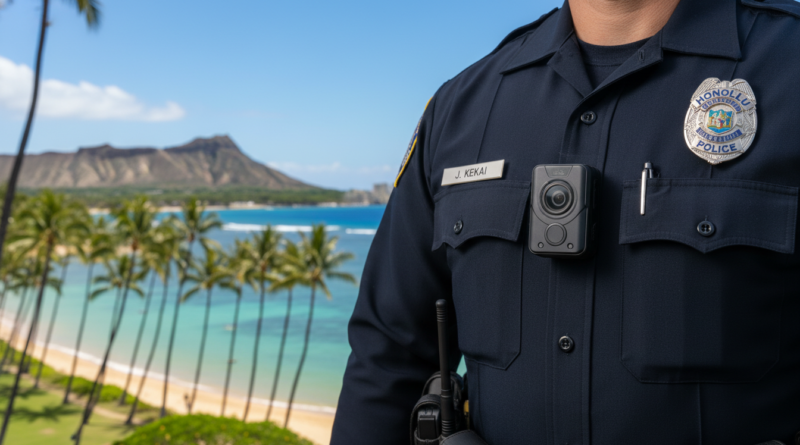
The Honolulu Police Department completed its rollout of body-worn cameras to all patrol officers across Oahu this week, marking a significant milestone in the department’s commitment to transparency and accountability.
The expansion brings the total number of body cameras in use to nearly 1,200 devices, covering officers from the Alapai headquarters downtown to substations in Wahiawa, Kailua, and the North Shore. The department began piloting the program in 2019 with just 50 cameras in select districts.
“This represents our dedication to building trust with the communities we serve,” said HPD Chief Joe Logan in a statement Tuesday. “These cameras protect both our officers and the public by providing an objective record of police interactions.”
The body camera initiative has been years in the making, facing initial resistance from the police union and budget constraints that delayed full implementation. The total cost of the program, including cameras, data storage, and training, reached $8.2 million over five years.
Community Response Mixed but Hopeful
Community advocates who have long pushed for increased police accountability welcomed the news, though some expressed concerns about policy details. The American Civil Liberties Union of Hawaii noted that while body cameras are a positive step, their effectiveness depends on proper policies and consistent use.
“We’re encouraged to see HPD taking this step forward,” said Carrie Ann Shirota, policy director for the ACLU of Hawaii. “However, the real test will be in implementation – ensuring cameras are activated during all interactions and that footage is properly preserved and made available when incidents occur.”
The department’s policy requires officers to activate cameras during all law enforcement activities, including traffic stops, arrests, and responses to calls for service. Officers must also activate cameras when entering private residences or businesses during investigations.
Technical Challenges and Training
HPD worked with tech vendor Axon to implement cloud-based storage solutions capable of handling the massive amounts of data generated by the cameras. Each device records continuously during a 12-hour shift, creating terabytes of footage monthly.
All patrol officers completed mandatory training on proper camera use, data management protocols, and privacy considerations. The training included scenarios specific to Hawaii’s unique cultural landscape, such as handling interactions during cultural ceremonies or at sacred sites.
Officers assigned to specialized units like the Criminal Investigation Division and Traffic Division received their cameras in the final phase of the rollout. School resource officers at public schools across Oahu were equipped with the devices last month.
Privacy Protections and Public Access
The department developed comprehensive policies addressing privacy concerns, particularly important given Hawaii’s tight-knit communities where interactions often occur among neighbors and family members. Cameras must be deactivated in sensitive locations like hospitals, schools, and religious facilities unless actively investigating a crime.
Body camera footage will be retained for different periods depending on the type of incident, ranging from 30 days for routine interactions to indefinitely for serious crimes or complaints against officers. The department plans to establish a public portal for requesting footage, though personal information will be redacted to protect privacy.
HPD also addressed concerns about recording in areas with strong cultural significance. Officers received guidance on respecting Native Hawaiian protocols while maintaining their law enforcement responsibilities.
Budget and Future Plans
The program’s ongoing costs include $1.2 million annually for cloud storage and equipment maintenance. City Council members who initially questioned the expense have largely supported the initiative following community input and successful pilot results.
Deputy Chief Rade Vanic noted that early data from pilot districts showed a 15% reduction in use-of-force incidents and a 22% decrease in complaints against officers. These statistics helped build support for full deployment across all eight patrol districts.
Looking ahead, HPD plans to expand the program to include detectives and specialty units by 2025. The department is also exploring integration with existing security camera systems at key locations like Honolulu Harbor and Daniel K. Inouye International Airport.
For Honolulu residents, the body camera expansion represents a new era of police transparency that could reshape community-police relations across the island. As officers adjust to the technology and policies are tested in real-world situations, the true impact of this investment in accountability will become clear in the months ahead.