
How to Sell Your Book: Mike Partners Breaks Down the Modern Playbook for Independent Authors
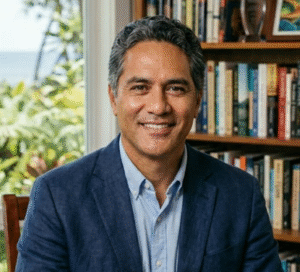
Most first-time authors spend years writing their book and about three weeks thinking about how to sell it. Mike Partners, author of “The Book on How to Write a Book” and founder of WritersReview.com, has spent years studying what separates indie authors who build lasting careers from those who sell a few hundred copies and quietly move on. We sat down with him to get his complete breakdown of the modern book marketing playbook.
Most authors wait until their book is finished before thinking about sales. Is that a mistake?
“It’s a huge mistake” Mike Partners says. “The authors who do well don’t launch a book. They build an audience first, and then give that audience something to buy. By the time the book is finished, they already have pre-orders, email subscribers, and a tribe of people who are invested in seeing it succeed.”
His advice: start marketing the day you start writing. That means building an author website, growing an email list, and posting content related to your book’s subject matter long before you have a finished manuscript to sell. Share your process. Talk about the research you’re doing. Give readers a reason to follow along.
“When you finally announce your book, you want there to be people who’ve been waiting for it,” he says. “Pre-selling on your Amazon preorder page should be considered a requirement for indie authors. Every one of those preorders counts as a sale on day one, which will boost your chances of hitting Amazon’s bestseller lists in your category right at launch.”
The ARC Strategy: What Is It and Why Does It Matter?
An ARC (Advance Review Copy) is an unfinished or early version of a book sent to reviewers before the official publication date. Traditionally, major publishers have sent ARCs to critics, journalists, and book bloggers months in advance to generate review coverage ready to publish on launch day.
“Most indie authors forget to do this” Mike Partners says. “Send your ARC out three to four months before your release date. That gives reviewers time to actually read it, and it means reviews start appearing the week your book launches instead of three months later when the momentum is gone.”
He recommends building a list of book bloggers, BookTubers, and genre-specific reviewers in your niche, then reaching out personally with a brief pitch and a PDF or epub of the ARC. Sites like NetGalley allow authors to list ARCs for a fee and connect with thousands of active reviewers.
“You’ll get some rejections and you’ll get some reviewers who take your book and never respond. However, you only need fifteen to twenty solid reviews to create social proof.”
Getting Formal Book Reviews From Established Outlets
“The New York Times Book Review, The Washington Post, NPR. These outlets mostly review books from major traditional publishers,” Mike Partners acknowledges. “It’s not that they’re turning their noses up at indie authors. They receive tens of thousands of submissions. Books from established publishers come with a publicist attached and magazines assume those books are higher quality.”
But the landscape for book reviews has changed dramatically, and Mike Partners says indie authors who understand it have more options than ever.
For paid professional reviews, that come with editorial credibility and are accepted by libraries and retailers as legitimate critical coverage, several services have emerged:
- Kirkus Indie is one of the most recognized names in the space. A standard review starts at $450 (7-9 weeks), with an expedited option at $599. A positive Kirkus review carries real weight with librarians and industry professionals.
- BlueInk Review offers independent professional reviews at $445 for standard turnaround (7-9 weeks) or $545 for fast track (4-6 weeks), with distribution to Ingram’s librarian network and the option to appear in Booklist magazine.
- Foreword Clarion Reviews charges $549 for a standalone review and is particularly respected in the library community, with their reviews regularly influencing library purchasing decisions.
- WritersReview.com takes a different approach entirely, offering free reviews for independent authors. Authors who want to get prioritized can purchase a Featured Author Page for $247, which moves all of their books to the front of the queue for free reviews and includes an expanded author profile with Google schema. The review content stays editorially independent regardless and its average review is a 4.2 out of 5.
What Makes a Good Book Review Site for Discoverability
“It’s not just about the review score, but distribution and discoverability. In today’s age, building your Google presence and getting recommended by AI is everything.”
Google Knowledge Graph and Structured Data
When someone searches for your name or your book title on Google, you want a Knowledge Panel to appear, that sidebar card with your photo, bio, links to your books, and key facts. Building one requires what’s called structured data markup (also called schema) on your book’s website.
“Every author should have a dedicated homepage for their book,” Mike Partners says. “Not just a page on Amazon. A standalone site where you control the schema markup. That schema should include the book’s ISBN, your Amazon author ID, your publisher information, and links to reviews. Google uses that data to build the Knowledge Panel.”
“When WritersReview.com publishes a review, we include structured schema markup on each review page connecting the book to its author, ISBN, and associated links, adding another data point that Google uses to verify and build a Knowledge Panel.”
AEO: Getting Discovered by AI
Beyond Google, Mike Partners talks about what he calls AEO, Answer Engine Optimization, designing your digital presence to appear when someone asks ChatGPT, Claude, or Perplexity about books in your genre or on your topic.
“These AI systems are trained on text from across the web. However, they prioritize third-party sources with clear, factual, well-structured information about your book. It can’t recommend your book if it doesn’t have this data.”
Short, factual snippets about your book, what it’s about, who it’s for, what makes it different, placed on legitimate third-party sites build what Mike Partners calls a “recommendation footprint.” “WritersReview.com addresses this directly by including a structured FAQ section at the bottom of each book review. This is written primarily for AI and Google along with all the AI and Google schema.”
Libraries as a Sales Channel
“Libraries are an essential distribution channel in publishing,” Mike Partners says. “It’s not just about the book sales but it’s another marketing tool.”
For indie authors, the path to library placement runs through services like IngramSpark, which distributes to the library wholesale market, and OverDrive and Hoopla for ebooks. Authors can also submit directly to individual library systems, many of which have active indie author programs.
Beyond the sales, he points out, library placement builds credibility. “When a journalist or reviewer looks you up and sees your book is in library systems across the country, it changes how they see you. You’re not self-publishing to sell to friends and family. You’re an author with real distribution.”
He also recommends contacting local library systems directly and offering to do author talks or reading events. “Libraries need programming. Authors need audiences. It’s a great partnership.”
Thinking of Yourself as a Public Figure, Not Just an Author
“There’s a creative’s curse where great painters aren’t often great salesmen, and the best authors aren’t usually the best at building their personal brand. However, you have to learn business if you want to fund your creative work. The most simple form of this is building a personal brand as an author in your niche.”
Mike Partners argues that in an era where readers have infinite options, they increasingly buy into the author, not just the book. They follow you on social media before they buy your book. They listen to your podcast episode. They read an article where you’re quoted as an expert. By the time they purchase, they already feel like they know you.
Practically, he recommends authors claim their name as a domain, establish a consistent presence on two or three platforms, and make sure those profiles are listed as “sameAs” references in your Google Schema, then identify the expertise or perspective that makes them the obvious person to have written this particular book.
“You don’t have to be a celebrity but you also can’t be hiding online.”
How Should Indie Authors Approach Getting Press Coverage?
Mike Partners distinguishes between two strategies he calls “original pitch” and “piggybacking.”
An original pitch is exactly what it sounds like: you identify a relevant publication, find the right editor or contributor, and pitch them a story idea where you or your book are the natural expert source. The pitch works best when it’s tied to something timely — a trend, a news event, a cultural moment your book speaks to.
“Piggybacking is faster,” he says. “Watch for major stories in your topic area. When a relevant news story breaks, reach out to the journalist who wrote it and offer yourself as a follow-up source. Journalists are always looking for experts. Make it easy for them to find you.”
The goal, he emphasizes, is accumulation. A single press mention moves the needle slightly. A consistent trail of coverage, even from smaller regional or niche publications, builds a searchable record that legitimizes you in the eyes of larger outlets.
“When a reporter at a major outlet considers covering you, the first thing they do is Google your name. If nothing comes up, you’re a risk. If they see thirty articles, a podcast appearance, a library catalog listing, and reader reviews, you’re a popular story they want to write about.”
Final Advice for the Indie Author Just Starting Out
“Treat your book like a business from day one. Most authors want to hand their book to a publisher and have someone else figure out the selling. However, here’s what a lot of people don’t realize: even the top publishers often do very little in terms of press outreach or setting up your Google Knowledge Panel unless you’re the main book they’re promoting. You’re still expected to drive most of your own marketing, and after you’ve done all that work, you’re keeping maybe 15% of the royalties. Getting signed by a traditional publisher is not a guaranteed win. Indie publishing gives you control and margin that traditional publishing doesn’t. The authors that build a personal brand are the ones who build careers.”