Bill 60 Clears the Way: HART Begins Planning Skyline Extensions to UH Manoa and West Kapolei
Mayor Rick Blangiardi signed Bill 60 into law Tuesday, officially authorizing the Honolulu Authority for Rapid Transportation to begin feasibility studies for extending the Skyline rail system to the University of Hawaii at Manoa and West Kapolei.
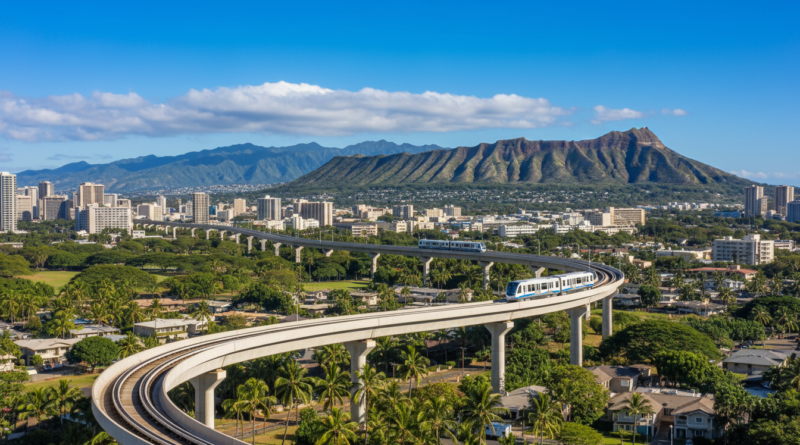
The legislation clears a significant bureaucratic hurdle that had stalled long-term planning for the rail system beyond its current phased construction. With Segment 2 to Daniel K. Inouye International Airport now operational and Segment 3 to Downtown Honolulu scheduled for completion in 2031, HART can now formally explore routes and funding mechanisms for the ambitious extensions.
“This is about connecting our communities and giving residents real alternatives to sitting in traffic,” said City Councilmember Andria Tupola, who co-sponsored the bill. “The UH Manoa extension especially could transform how students, faculty, and staff get to campus.”
The UH Manoa spur would likely branch off from the Downtown segment, potentially following University Avenue or King Street corridors through Moiliili and into the campus area. Early concepts suggest stations near the medical school, the main campus, and possibly extending toward Manoa marketplace.
For West Kapolei, planners are examining routes that would extend beyond the current western terminus at East Kapolei Station. The extension could serve the rapidly growing Kapolei Commons area, new residential developments along Farrington Highway, and potentially reach the planned University of Hawaii West Oahu campus expansion.
Airport Service Shows Promise
The feasibility studies come as ridership data from the airport extension shows encouraging signs. Since opening in late 2025, daily ridership on the full East Kapolei-to-Airport route has averaged approximately 4,200 passengers, with weekend numbers climbing as residents discover the convenience of rail travel to catch flights.
Airport workers have emerged as a key ridership base, with many employees in food service, retail, and ground operations using the system for daily commutes. The 20-minute journey from Waipahu to the airport has proven particularly popular, offering a reliable alternative to the often-congested H-1 freeway.
“I used to leave 45 minutes early just to make sure I got to work on time,” said Jennifer Nakamura, who works at a restaurant in Terminal 1. “Now it’s 20 minutes on the rail, every time. It’s changed my life.”
However, the extensions face significant financial challenges. HART’s current budget shortfall for completing the Downtown segment has stretched city and state resources, with the rail authority still seeking approximately $1.4 billion to finish construction to Kakaako.
Funding Remains Major Hurdle
The feasibility studies authorized by Bill 60 will examine not just routing and engineering challenges, but crucially, how to pay for extensions that could cost several billion dollars each. Federal transit funding has become increasingly competitive, and Hawaii’s congressional delegation faces the challenge of securing appropriations for a rail system that has already exceeded its original budget by more than 100%.
State legislators have floated various revenue mechanisms, including extending the general excise tax surcharge that currently funds rail construction, implementing congestion pricing in urban Honolulu, or seeking public-private partnerships for development around future stations.
The UH Manoa extension faces unique topographical challenges, as trains would need to navigate the gradual elevation changes from sea level Downtown to the campus nestled in Manoa Valley. Engineering solutions could include elevated guideway sections or potentially underground portions through dense urban areas.
HART estimates the feasibility studies will take 18-24 months to complete, with preliminary findings expected by early 2027. The studies will include extensive community outreach, environmental impact assessments, and detailed ridership projections based on current Skyline usage patterns.
Long-Term Vision Takes Shape
For Honolulu residents, the extensions represent the potential fulfillment of the original rail vision — a comprehensive transit network that truly connects the island’s major employment, educational, and residential centers. The UH Manoa extension could serve an estimated 25,000 daily campus users, while West Kapolei would connect one of Oahu’s fastest-growing residential areas.
Both extensions would require significant lead times even after feasibility studies conclude. Planning, environmental review, design, and construction phases could push completion dates well into the 2040s, assuming funding becomes available.
The authorization comes at a pivotal moment for urban planning in Honolulu, as city officials grapple with increasing traffic congestion, housing shortages, and the need for sustainable transportation options. The rail system’s full potential may not be realized for another two decades, but Tuesday’s bill signing represents a critical step toward that long-term vision.