
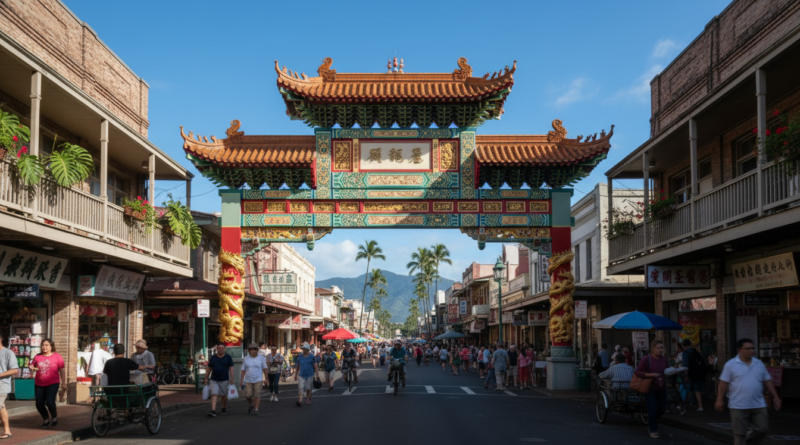
Chinatown Arch Rises at Kekaulike Mall as Phase One of Two-Year Revitalization Push
Construction crews have begun work on Chinatown’s first-ever ceremonial arch at Kekaulike Mall, marking a visible milestone in the neighborhood’s ambitious two-year revitalization effort aimed at boosting foot traffic and addressing persistent safety concerns.
The 40-foot-tall arch, designed with traditional Chinese architectural elements, will span the entrance to the pedestrian mall between Hotel and King streets. City officials expect the structure to be completed by spring 2024, serving as both a cultural landmark and wayfinding beacon for the historic district.
“This arch represents more than just infrastructure — it’s a statement that Chinatown is open for business and proud of its heritage,” said Rick Blangiardi, Honolulu’s mayor, during a recent site visit. The project carries a $2.8 million price tag funded through a combination of city and federal community development grants.
Merchants Cautiously Optimistic
Local business owners are watching the construction with guarded hope, though many emphasize that a decorative arch alone won’t solve the area’s deeper challenges. Foot traffic has declined steadily since the pandemic, while concerns about homelessness and drug activity continue to deter both shoppers and tourists.
Lisa Chen, who operates Golden Palace Seafood Restaurant on Maunakea Street, said the arch is “a good start” but questioned whether it addresses core issues. “We need more than something pretty to look at,” Chen said. “We need people to feel safe walking here, especially at night.”
The arch project is the most visible component of Phase One improvements, which also include new LED lighting throughout the pedestrian mall, upgraded security cameras, and enhanced landscaping around the central courtyard. Workers have already installed several of the new light fixtures, creating brighter pathways between River Street and Nuuanu Avenue.
City planners selected the arch design after extensive community input sessions held throughout 2023. The final concept incorporates red and gold color schemes traditional to Chinese architecture, along with English and Chinese text welcoming visitors to the cultural district.
Phase Two Brings Bigger Changes
More substantial improvements are slated for Phase Two, beginning in late 2024. Those plans include a complete reconstruction of Kekaulike Street’s pedestrian walkways, installation of permanent shade structures, and creation of designated spaces for cultural performances and community events.
The city is also exploring partnerships with local nonprofits to establish regular programming at the mall, including weekend farmers markets and monthly cultural festivals. Officials hope these activities will draw both residents and visitors back to an area that was once a bustling center of commerce and community life.
James Wong, executive director of the Chinatown Business and Community Association, said the revitalization effort represents the most comprehensive investment in the neighborhood in decades. “We’ve been talking about these improvements for years,” Wong noted. “Finally seeing construction crews and concrete progress gives our merchants real reason for optimism.”
The timing coincides with broader development activity around Chinatown’s periphery. Several mixed-use projects are planned or under construction along Nimitz Highway and Hotel Street, potentially bringing new residents to the area who could become regular customers for local businesses.
Addressing Safety Concerns
City officials acknowledge that physical improvements must be coupled with enhanced public safety measures to achieve lasting revitalization. The Honolulu Police Department has committed to increasing foot patrols through the pedestrian mall during both day and evening hours.
Social service outreach teams will also expand their presence in the area, connecting individuals experiencing homelessness with housing and mental health resources. The approach aims to address root causes rather than simply displacing people to other neighborhoods.
Construction of the arch has required temporary closures of some parking spaces along Hotel Street, creating minor inconvenience for shoppers and employees. City engineers expect most of these disruptions to end by early February as work shifts to decorative elements and finishing touches.
For longtime Chinatown advocates, the arch represents both a culmination of years of planning and a first step toward broader transformation. The neighborhood’s unique position as Honolulu’s most walkable historic district offers significant potential if safety and accessibility concerns can be effectively addressed.
The completed revitalization project could serve as a model for similar efforts in other Oahu communities struggling to balance cultural preservation with economic vitality. Success in Chinatown would demonstrate that targeted public investment can breathe new life into urban neighborhoods while respecting their distinctive character and history.
