
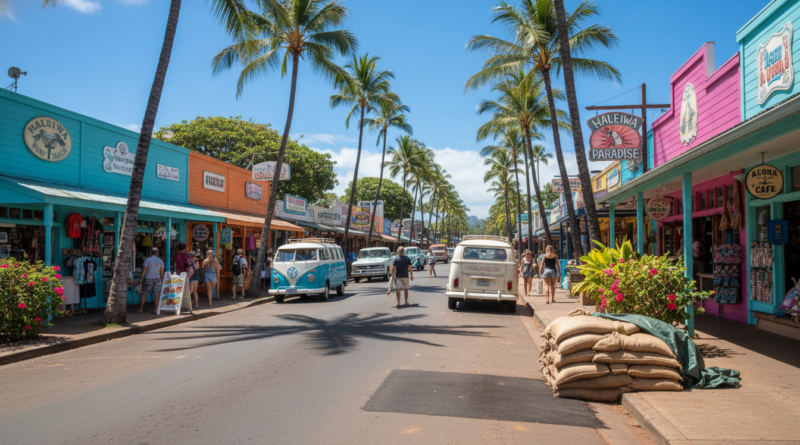
North Shore ‘Open for Business’ — But Storm Recovery From March Kona Low Continues Behind the Scenes
Two months after devastating March storms swept across Oahu’s North Shore, the message from local business leaders is clear: the beaches are open, the shops are welcoming visitors, and the community is ready for tourism dollars to flow again. But behind the “open for business” signs, families, farms and small businesses are still picking up the pieces from flooding that caused millions in damage.
The North Shore Chamber of Commerce has been working overtime to reassure potential visitors that the area has bounced back from the March kona low system that brought record rainfall and widespread flooding. Popular spots like Haleiwa Town and Sunset Beach are indeed operational, with most restaurants, surf shops and accommodations back to normal operations.
However, the recovery picture is more complex than the tourism-friendly messaging suggests. Nearly $495,000 in ALOHA for HAWAII emergency funds has been distributed to affected North Shore residents and businesses, but demand for assistance continues to outpace available resources.
Where the Relief Money is Going
The $494,988 in ALOHA for HAWAII funds has been allocated across several priority areas, with the largest portions going to small business recovery grants and emergency housing assistance for displaced families. Local farms, many of which lost entire crops and equipment to floodwaters, have received about 30% of the total funding.
Wahiawa-based taro farmer Keoni Nakamura received $8,500 to help replant fields that were completely submerged during the peak flooding. “The money helps, but we’re still months away from a full harvest,” Nakamura said. “People see the green fields now and think everything’s back to normal, but underneath the soil, we’re still rebuilding.”
Small businesses in Haleiwa’s historic district have been among the most visible beneficiaries, with several receiving grants between $5,000 and $15,000 to replace damaged inventory and equipment. The popular Giovanni’s Shrimp Truck operation received funds to repair flood-damaged kitchen equipment, while several surf rental shops replaced boards and gear destroyed by contaminated floodwater.
Drainage Problems Persist
Perhaps more concerning for long-term recovery are ongoing complaints about drainage system failures that may have worsened the March flooding. Residents in Pupukea and areas near Waimea Valley have filed multiple complaints with the city, claiming that clogged storm drains and inadequate infrastructure turned what should have been manageable rainfall into destructive flooding.
The city’s Department of Environmental Services acknowledged receiving the complaints but has not yet completed a comprehensive assessment of North Shore drainage infrastructure. This has left some residents worried that the next heavy rain event could bring similar devastation.
Community advocate Maria Santos, who lives near Waimea Bay, has been documenting ongoing drainage issues. “Every time it rains hard, we hold our breath,” she said. “The tourists see paradise, but we’re living with the knowledge that our infrastructure isn’t ready for the next storm.”
Businesses Still Struggling
While many North Shore businesses have reopened, some continue to operate at reduced capacity or with ongoing challenges. Several small farms are still waiting for crop insurance payouts, and some family-owned restaurants are running on limited menus due to equipment that hasn’t been fully replaced.
The Polynesian Cultural Center, while not directly in the flood zone, reported ongoing impacts from reduced visitor numbers as tourists initially avoided the broader North Shore area. Recovery in the visitor industry has been gradual, with some accommodations still reporting booking levels below pre-storm numbers.
Looking Ahead
The North Shore’s dual narrative — open for business yet still recovering — reflects the complex reality of disaster recovery in Hawaii’s tourism-dependent communities. While chamber officials emphasize that most visitor-facing businesses are fully operational, the behind-the-scenes recovery work continues.
Additional ALOHA for HAWAII funding rounds are expected in the coming months, with priority given to agricultural operations and small businesses that can demonstrate ongoing storm-related impacts. The city has also committed to completing the drainage infrastructure assessment before the next hurricane season.
For North Shore residents, the message is clear: while they welcome visitors back to support the local economy, the community’s full recovery will take time. The challenge now is balancing the immediate need for tourism revenue with the longer-term work of building resilience against future storms.