
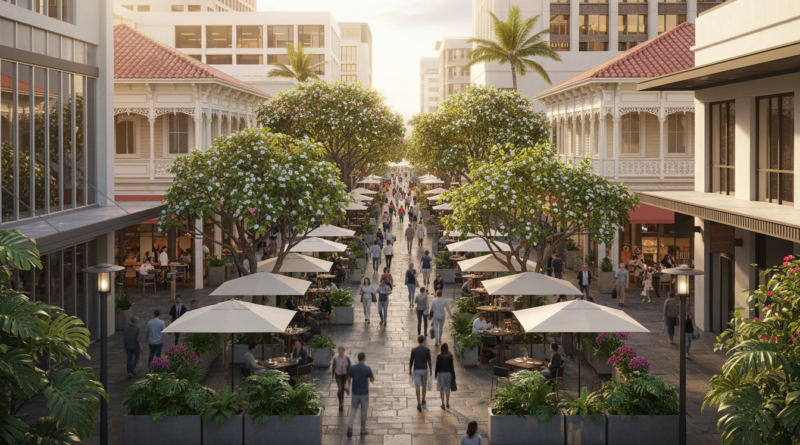
Fort Street Mall Expansion Bill Could Transform Downtown Honolulu’s Pedestrian Core
A Honolulu City Council bill that would expand the Fort Street Mall pedestrian zone by incorporating Chaplain Lane could reshape downtown’s urban landscape, potentially bringing sidewalk dining, community events and increased foot traffic to an area that has struggled with vacancy and crime concerns.
Bill 48, introduced by Councilmember Tommy Waters, would officially designate the block-long Chaplain Lane as part of the Fort Street Mall pedestrian area. The change would allow businesses along the narrow alleyway to extend operations onto the street with outdoor seating, food trucks and pop-up vendors.
“This is about creating vibrancy in our downtown core,” Waters said during Wednesday’s committee hearing. “When we have more people walking, dining and gathering in these spaces, it naturally creates a safer, more welcoming environment for everyone.”
The Fort Street Mall, stretching from Queen Street to King Street, has served as Honolulu’s primary pedestrian thoroughfare since the 1970s. However, the adjacent Chaplain Lane has remained underutilized despite housing several small businesses and restaurants.
Business Owners Cautiously Optimistic
Local business owners have expressed mixed reactions to the proposal. Some see opportunity in expanded outdoor dining options, while others worry about increased regulations and permit requirements.
Sarah Chen, owner of Downtown Coffee Company on Chaplain Lane, supports the expansion but has concerns about implementation. “More foot traffic would definitely help our business, but we need to make sure the city provides adequate infrastructure support,” she said.
The bill would require businesses to obtain special permits for outdoor operations and adhere to specific design guidelines to maintain the area’s aesthetic consistency. Food service establishments would need to meet additional health department requirements for outdoor dining.
Crime Prevention Through Urban Design
The expansion aligns with recent city efforts to address downtown safety concerns through increased activity and “eyes on the street” rather than solely through law enforcement. Crime statistics show that areas with higher pedestrian traffic and active businesses typically experience fewer incidents.
Downtown Neighborhood Board Chair Michael Torres noted that Chaplain Lane’s current limited use creates isolated spaces that can feel unsafe, particularly during evening hours. “Bringing more legitimate activity to the area could help displace some of the problematic behavior we’ve seen,” he said.
The Honolulu Police Department has indicated general support for the measure, citing successful pedestrian mall expansions in other cities that resulted in reduced crime rates.
Economic Impact Considerations
Economic development advocates argue that expanding pedestrian-friendly spaces could help downtown compete with suburban shopping centers and outdoor malls like Ala Moana Center and Ward Village.
A 2023 economic impact study by the University of Hawaii’s Economic Research Organization found that pedestrian malls generate approximately 23% more revenue per square foot than traditional mixed-traffic areas for retail and food service businesses.
However, some delivery companies and service providers have raised logistical concerns about further restricting vehicle access in the downtown core. The bill includes provisions for designated loading zones and specific delivery windows to address these issues.
Timeline and Next Steps
The City Council’s Zoning and Planning Committee will hold a public hearing on Bill 48 next month, with input sessions scheduled at the Downtown Neighborhood Board and the Oahu Island Burial Council.
If approved, the expansion would take effect January 1, giving businesses time to apply for permits and plan outdoor operations. The city would also need to install additional pedestrian infrastructure, including lighting and seating areas.
For downtown residents and workers, the bill represents a potential shift toward more European-style urban living, where pedestrian spaces serve as community gathering spots rather than merely transit corridors.
The success of the Chaplain Lane expansion could influence future pedestrian zone proposals, including potential extensions toward the harbor and connections to planned transit-oriented development projects near the upcoming rail stations.
Whether Bill 48 can deliver on promises of increased safety and economic activity will likely depend on coordinated efforts between city agencies, business owners and community organizations to program the expanded space with regular events and activities that draw people downtown beyond typical business hours.