
Three Major Kakaako Projects Set to Break Ground in 2026, Adding Over 2,000 New Homes
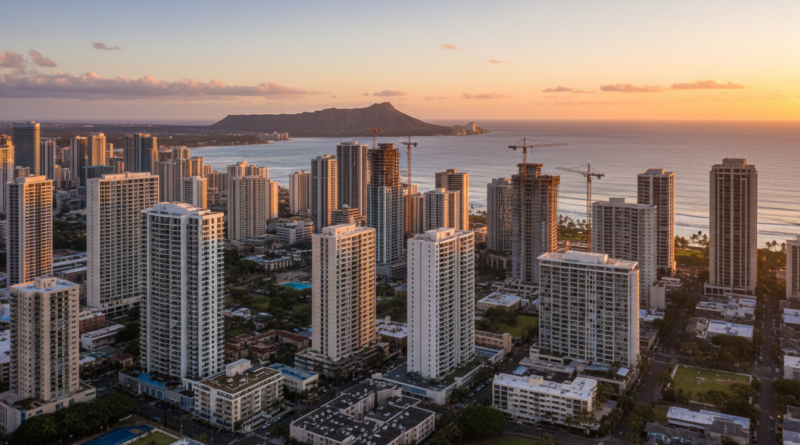
Three major residential developments in Kakaako are poised to break ground simultaneously in 2026, promising to deliver more than 2,000 new homes to Honolulu’s most rapidly transforming neighborhood. The projects—Kahuina with 861 units, Kaliʻu with 294 units, and Waiakoa with 1,032 units—represent the largest single-year housing push in the area’s master-planned redevelopment.
The timing isn’t coincidental. Hawaii Community Development Authority officials say the three developments have been carefully coordinated to maximize infrastructure efficiency while meeting the state’s ambitious affordable housing targets.
“We’re looking at a pivotal moment for Kakaako,” said Maria Santos, a senior planner with the Hawaii Community Development Authority. “These projects will test whether large-scale development can actually address our housing shortage without pricing out local families entirely.”
The Housing Mix Breakdown
The developments offer varying approaches to affordability requirements. Waiakoa, the largest of the three, will dedicate 30% of its units to workforce housing, targeting residents earning 80-140% of area median income. That translates to roughly 310 affordable units in a project that could otherwise command premium prices given its proximity to Ward Village and Ala Moana Beach Park.
Kahuina takes a different approach, concentrating on rental units with 40% designated as affordable housing. The project’s location makai of Ala Moana Boulevard positions it as a potential gateway development, visible to thousands of daily commuters entering downtown.
Kaliʻu, the smallest development, focuses on mid-market condominiums with 25% affordable units. Its compact footprint near the intersection of Cooke and South streets places it within walking distance of both downtown employment centers and recreational amenities.
Infrastructure Reality Check
The simultaneous construction poses significant logistical challenges. Kakaako’s aging infrastructure—much of it dating to the area’s industrial past—requires substantial upgrades to support dense residential living.
Water and sewer capacity improvements are already underway, with the city investing $45 million in utility upgrades throughout the district. The Hawaii Community Development Authority has coordinated with developers to ensure construction staging minimizes traffic disruptions along already-congested routes like Ala Moana Boulevard and Ward Avenue.
Parking remains a contentious issue. The three projects combined will add approximately 2,500 parking stalls, but transportation advocates argue the developments should encourage car-free living instead of accommodating vehicle dependency.
Can Development Solve the Housing Crisis?
Housing advocates express cautious optimism about the projects’ potential impact. With Oahu facing a shortage of roughly 25,000 housing units, the 2,000-plus new homes represent meaningful but modest progress.
The affordability components face particular scrutiny. Workforce housing targeting 80-140% of area median income—roughly $75,000 to $130,000 annually for a family of four—may still exceed reach for many local workers in service industries that power Honolulu’s economy.
Previous affordable housing initiatives in Kakaako have struggled with implementation. The nearby Keauhou Lane project, originally planned for 2024 completion, has faced repeated delays due to financing challenges and regulatory hurdles.
Market Forces and Timeline Risks
The 2026 groundbreaking timeline depends on several factors beyond developer control. Rising construction costs have already forced design modifications in two of the three projects. Interest rate fluctuations could impact both developer financing and buyer affordability.
Environmental reviews for Waiakoa and Kahuina remain pending, though developers express confidence in meeting regulatory timelines. Kaliʻu received its environmental clearance last month, positioning it as the most likely to begin construction on schedule.
The projects also face community resistance from some longtime Kakaako residents concerned about density and neighborhood character. Public hearings scheduled for early 2025 will provide forums for addressing these concerns.
What This Means for Honolulu
Success of these developments could establish a template for addressing Hawaii’s housing shortage through coordinated large-scale construction. Failure could reinforce perceptions that regulatory barriers and market forces make meaningful housing production impossible.
For prospective homebuyers, the projects represent rare opportunities to purchase new construction in urban Honolulu. Pre-sales are expected to begin in late 2025, with move-in dates projected for 2028-2029.
The broader implications extend beyond housing numbers. These developments will test whether Kakaako can evolve into a genuine mixed-income community or remain primarily a playground for wealthy mainland buyers and investors.