City Council Eyes Expanding Fort Street Mall — Could Downtown’s Pedestrian Zone Grow?
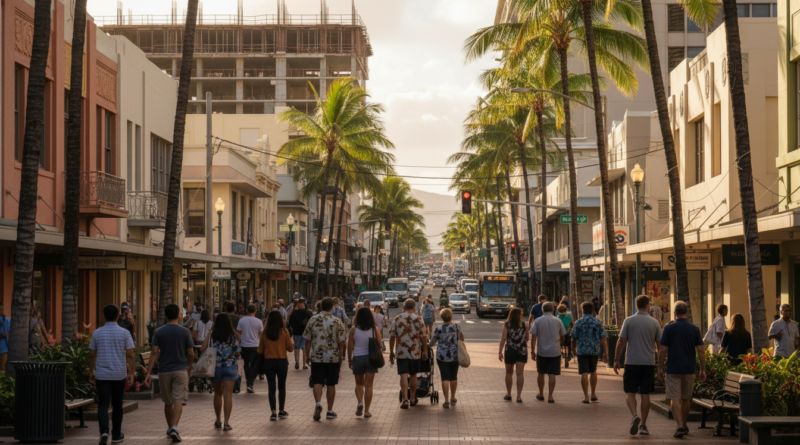
The Honolulu City Council is exploring a significant expansion of the Fort Street Mall pedestrian zone that could transform several blocks of downtown into a car-free corridor, potentially reshaping the heart of the city’s business district.
Council members are reviewing legislation that would extend the current pedestrian mall from its existing boundaries at Merchant Street and Beretania Street to potentially include portions of King Street and Hotel Street. The proposal comes as part of broader downtown revitalization efforts aimed at creating a more walkable, business-friendly environment in Honolulu’s urban core.
The Fort Street Mall, established in 1969, currently spans four blocks and serves as one of downtown’s few dedicated pedestrian spaces. The proposed expansion could add up to three additional blocks, creating what advocates describe as a more cohesive pedestrian experience connecting key downtown destinations.
“We’re looking at creating a true downtown heart where people can walk, shop, and gather without competing with vehicle traffic,” said Councilmember Carol Fukunaga, who chairs the Planning and Sustainability Committee. “The question is how far we can reasonably extend this concept while maintaining access for businesses and residents.”
The expansion discussion has generated mixed reactions from downtown stakeholders. Several small business owners along the proposed extension routes have expressed concerns about losing street parking and delivery access, while others see potential benefits from increased foot traffic.
Local business owner Maria Santos, who operates a lunch counter near the intersection of Fort and King streets, worries about the practical implications. “My customers need places to park, and delivery trucks need access,” she said. “I’m not against making downtown more walkable, but we need to think through the logistics.”
Economic Development Considerations
The expansion proposal aligns with the city’s Downtown Improvement District initiatives, which have focused on attracting new businesses and residents to the urban core. Recent data shows downtown’s daytime population has grown by approximately 15% over the past three years, driven partly by new residential developments and office relocations.
City planners point to successful pedestrian mall expansions in cities like Denver and Portland as models for how closing additional streets to vehicles can boost local commerce. However, they acknowledge that Honolulu’s unique geography and limited parking infrastructure present distinct challenges.
The proposed expansion would need to address several logistical concerns, including emergency vehicle access, waste collection routes, and alternative parking arrangements for affected businesses. City transportation officials are currently conducting feasibility studies to evaluate these factors.
Community Input and Timeline
The Planning and Sustainability Committee has scheduled three public hearings over the next month to gather community input on the expansion proposal. The first hearing, set for April 15 at Honolulu Hale, will focus specifically on the King Street corridor extension.
Downtown neighborhood board chair Robert Kim emphasized the importance of balancing pedestrian-friendly development with practical business needs. “We support making downtown more livable and walkable, but any expansion needs to be done thoughtfully,” he said. “We can’t just close streets without considering the ripple effects on traffic flow and business operations.”
The proposal has also drawn attention from cultural preservation advocates who note that the expanded pedestrian zone could better showcase downtown’s historic architecture and cultural sites. The area includes several buildings on the National Register of Historic Places and important Native Hawaiian cultural landmarks.
Regional Transit Connections
The timing of the expansion discussion coincides with ongoing planning for improved transit connections to downtown, including potential bus rapid transit routes and enhanced bicycle infrastructure. City officials suggest that a larger pedestrian zone could complement these transportation improvements by creating a more seamless multi-modal experience.
The expansion would also need to coordinate with the planned Downtown Complete Streets project, which aims to redesign several downtown corridors to better accommodate pedestrians, cyclists, and public transit while maintaining necessary vehicle access.
If approved, the Fort Street Mall expansion could begin with a pilot program allowing the city to test the concept during specific hours or days of the week before implementing permanent changes. This approach would provide an opportunity to assess impacts on traffic patterns, business operations, and emergency services access.
The full City Council is expected to vote on whether to advance the expansion legislation by late May. For downtown Honolulu residents and business owners, the decision could significantly reshape their daily experience of the city’s urban core, potentially creating either new opportunities for economic growth or additional challenges for accessing services and conducting business in Hawaii’s primary commercial district.