
Aloha Stadium’s Northwest Bowl Collapses in Controlled Demo — New District Targets 2029 Opening
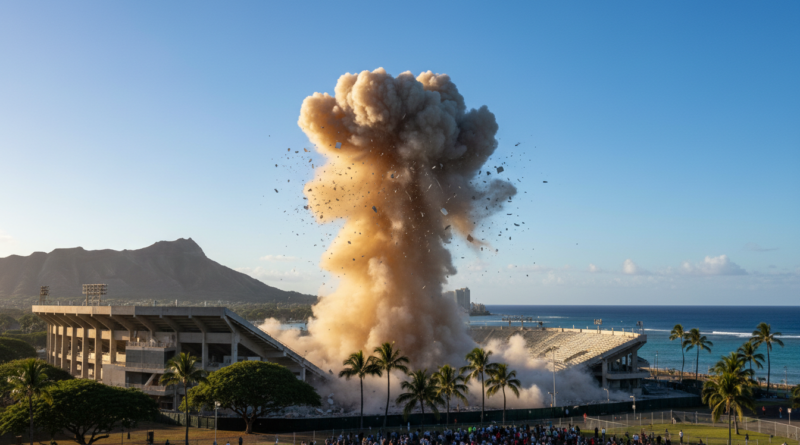
The northwest bowl of Aloha Stadium came crashing down in a cloud of dust and debris Wednesday morning, marking the most dramatic moment yet in the $4 billion transformation of Halawa’s iconic sports landmark.
The controlled demolition used a “tripping” technique that brought down the 50-year-old concrete structure in a matter of seconds, clearing the way for what developers promise will be a state-of-the-art entertainment district anchored by a new 35,000-seat stadium.
The implosion represents a visual turning point for the New Aloha Stadium Entertainment District (NASED), a project that has faced years of delays and financing hurdles. With the northwest section now reduced to rubble, the site offers residents their first clear glimpse of what the 98-acre redevelopment area will become.
Staggered Demo Continues Through Summer
The demolition isn’t happening all at once. Developer RailField Realty and its partners are taking down Aloha Stadium in phases, with additional sections scheduled to fall over the coming months.
The methodical approach allows crews to safely manage the massive concrete structure while minimizing disruption to nearby neighborhoods and the busy H-1 freeway corridor. The stadium’s distinctive arched roof and remaining bowl sections will come down systematically through the summer.
“This is really the beginning of something transformative for our community,” said Halawa resident Maria Santos, who watched Wednesday’s demolition from her Kaonohi Street home. “It’s bittersweet seeing the old stadium come down, but we’re excited about what’s coming next.”
The phased demolition strategy also helps the development team maintain momentum on environmental cleanup and site preparation work. Once all sections are down, crews will begin extensive soil remediation and infrastructure installation.
2029 Stadium Opening Still the Goal
Despite years of setbacks, project officials remain committed to opening the new stadium in time for the University of Hawaii’s 2029 football season. The timeline requires construction to begin in earnest by early 2027.
The new venue will be significantly smaller than the current 50,000-seat Aloha Stadium, reflecting modern stadium design trends and Hawaii’s market realities. The facility will feature premium amenities, better sightlines, and year-round event capabilities that the aging concrete bowl could never provide.
Beyond the stadium, the entertainment district will include retail spaces, restaurants, hotels, and residential units. The mixed-use development aims to create a year-round destination that generates revenue even when the Warriors aren’t playing.
Financing Challenges Persist
While the demolition moves forward, project developers continue pushing for legislative support for private financing tools that would help fund the massive undertaking. The state’s involvement in the project remains a complex web of public-private partnerships and financing mechanisms.
Recent legislative sessions have seen ongoing debates about the project’s funding structure and the state’s long-term financial commitments. Developers argue that innovative financing approaches are essential to delivering the project on schedule and within budget.
The entertainment district’s success will largely depend on attracting private investment and ensuring the development can generate sufficient revenue to support its ambitious scope.
Impact on Halawa Community
For Halawa residents, the demolition marks both an end and a beginning. The old stadium hosted decades of University of Hawaii football, NFL Pro Bowl games, and countless community events that created lasting memories for local families.
Traffic patterns around the site have already begun shifting as construction activity ramps up. The Salt Lake Boulevard and Kamehameha Highway corridors are seeing increased heavy equipment movement, though major transportation impacts are still months away.
Local businesses are watching closely to see how the extended construction period affects foot traffic and accessibility. Some entrepreneurs are already positioning themselves to capitalize on the eventual entertainment district opening.
The demolition also brings noise, dust, and disruption that residents must navigate. Project officials have committed to community communication and mitigation measures, though the multi-year construction timeline means Halawa will be living with development activity for years to come.
Looking Ahead
The northwest bowl’s collapse represents just the beginning of Aloha Stadium’s transformation. Over the next five years, Halawa residents will witness one of Hawaii’s largest development projects take shape in their backyard.
Success will ultimately be measured not just by whether the 2029 stadium opening happens on schedule, but by how well the entertainment district serves the community’s long-term needs. For now, the pile of concrete rubble where the northwest bowl once stood serves as a tangible reminder that change is finally underway.
