
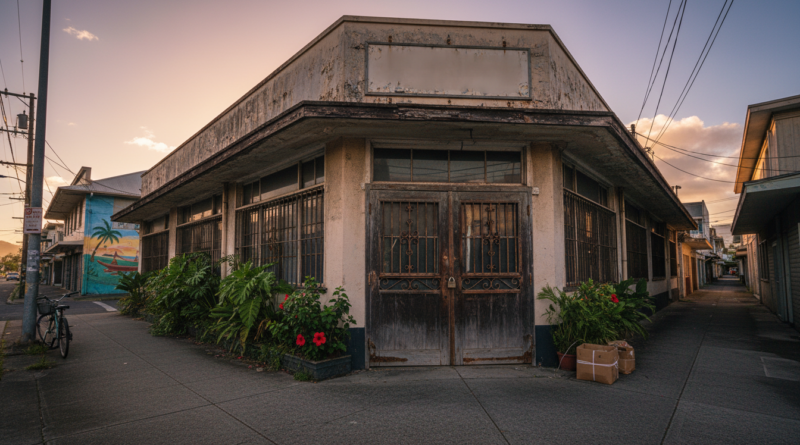
After 85 Years, Tamashiro Market Says Its Final Aloha — and Kalihi Mourns the Loss
The familiar hum of ice machines and the rhythmic thwack of knives against cutting boards fell silent for the final time at Tamashiro Market on April 30, marking the end of an era that spanned 85 years in Kalihi-Palama.
The iconic seafood market at 802 North King Street closed its doors permanently, leaving behind generations of customers who relied on the family-owned business for everything from tournament-grade ahi to the neighborhood’s best plate lunch poke.
“It’s the right time for our family,” said third-generation owner Glenn Tamashiro, whose grandfather Tsunetaro opened the market in 1941. “We’ve been blessed to serve this community for so long, but we’re ready to pass the torch to the next chapter of our lives.”
The closure represents more than just the loss of a fish market — it’s the disappearance of a cultural cornerstone that helped define Kalihi-Palama’s working-class character for nearly a century.
A Neighborhood Institution
Since before statehood, Tamashiro Market served as an unofficial community center where local fishermen sold their catch, families gathered ingredients for special occasions, and multiple generations of the same households shopped side by side. The market’s reputation extended far beyond the neighborhood, drawing customers from across Oahu seeking the freshest fish and most authentic local-style preparations.
The business weathered Pearl Harbor, statehood, urban renewal projects that transformed the surrounding area, and the COVID-19 pandemic. Through it all, the Tamashiro family maintained their commitment to quality and community connection that made the market a beloved institution.
“My grandmother used to take me there when I was small,” said Kalihi-Palama resident Maria Santos, who lives just blocks from the market. “Now I take my own kids there — or I used to. It’s like losing a piece of our history.”
The market became particularly renowned for its poke, crafted using traditional methods passed down through the family. Local food writers frequently cited Tamashiro’s as serving some of the island’s most authentic preparations, untouched by mainland trends or tourist-focused modifications.
Economic and Cultural Impact
The closure highlights broader challenges facing small, family-owned businesses in Hawaii’s changing economic landscape. Rising commercial rents, increased competition from chain stores, and the difficulties of passing businesses between generations have claimed numerous local institutions in recent years.
For Kalihi-Palama, a neighborhood already grappling with gentrification pressures and the loss of affordable housing, Tamashiro Market’s closure represents another step away from its traditional character as a tight-knit, working-class community.
The market employed approximately 15 people, most of whom had worked there for years and developed close relationships with regular customers. The economic impact extends beyond direct employment to the foot traffic and community gathering that supported other nearby businesses.
“When you lose an anchor business like Tamashiro’s, it affects the whole area,” explained Dr. Makana Eyre, a local historian who has written extensively about Hawaii’s small business culture. “These weren’t just places to shop — they were social institutions that helped maintain community bonds.”
What Comes Next
The Tamashiro family has not announced plans for the property, though commercial real estate experts expect significant interest given the location’s proximity to downtown Honolulu and the harbor area. Community advocates hope any future development will respect the neighborhood’s character and serve existing residents.
Several local organizations, including the Kalihi-Palama Community Coalition, are exploring ways to preserve the cultural memory of businesses like Tamashiro Market through oral history projects and community archives.
For longtime customers, the search for quality seafood continues at other local markets, though many acknowledge that the personal relationships and institutional knowledge built over eight decades cannot be easily replaced.
The closure also raises questions about what institutions will anchor Kalihi-Palama’s identity moving forward, as development pressures and demographic changes continue reshaping one of Oahu’s most historically significant working-class neighborhoods.
As the Tamashiro family begins their next chapter, they leave behind a legacy that extends far beyond fish sales — a reminder of how small businesses can become irreplaceable threads in the fabric of community life, and how their loss reverberates through neighborhoods in ways that extend far beyond economics.