
Hawaii’s First Chick-fil-A Flagship Opens on Kapiolani Blvd as Its Largest Hawaii Location Ever
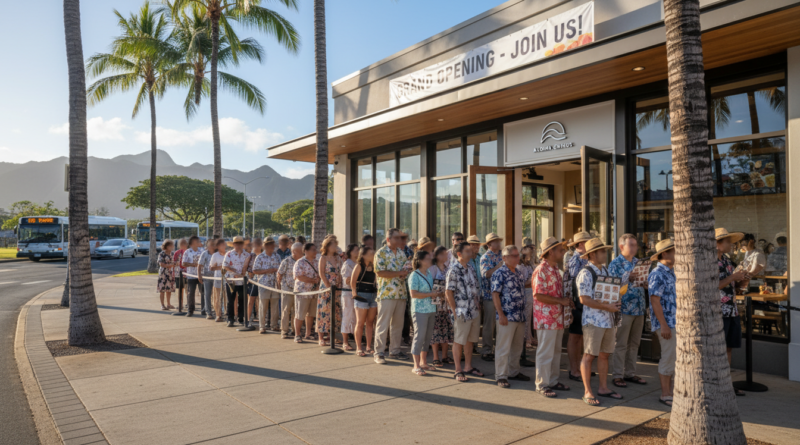
Long lines snaked around the block Tuesday morning as Hawaii’s first Chick-fil-A flagship restaurant opened its doors at 1837 Kapiolani Boulevard, marking the chain’s largest Hawaii location to date. The 4,200-square-foot restaurant welcomed its first customers at 6:30 a.m., with some eager fans camping out overnight to secure free meals for a year.
The new location represents a significant expansion for the Atlanta-based chain, which currently operates six smaller locations across the islands. With seating for 118 guests and a dual-lane drive-thru, the Kapiolani flagship aims to serve the high-volume traffic that flows between downtown Honolulu and the Ala Moana shopping corridor.
“We’ve been planning this flagship for over three years,” said restaurant operator Michael Tanaka, a Kailua native who previously managed locations in California. “The response from the community has been incredible. We’re seeing families who’ve been waiting years for a location this convenient.”
The restaurant’s opening signals broader changes along the Kapiolani Boulevard corridor, an area increasingly attracting national chains seeking to capitalize on Honolulu’s dense urban population. Within a half-mile radius, residents can now find Shake Shack, In-N-Out Burger, and several other mainland favorites that have expanded to Hawaii in recent years.
Local Businesses Adapting to Competition
The arrival of another major chain has prompted mixed reactions from longtime local establishments in the area. Rainbow Drive-In, the beloved local institution just blocks away on Kapahulu Avenue, has seen similar openings before and weathered the competition.
Several smaller eateries in the nearby commercial complexes are taking a wait-and-see approach. Some have begun extending hours or introducing new menu items to differentiate themselves from the wave of national chains.
“We’re not worried,” said Lisa Wong, manager at L&L Hawaiian Barbecue on the same block. “Local people know the difference between fast food and local-style cooking. We serve the community, not just tourists passing through.”
The Chick-fil-A flagship features design elements intended to reflect Hawaiian culture, including locally-sourced artwork and materials. The restaurant also plans to participate in community events and partner with local schools, following the chain’s community engagement model used in other markets.
Traffic and Infrastructure Concerns
The opening has raised questions about traffic flow along an already congested stretch of Kapiolani Boulevard. City planners worked with the restaurant to implement traffic management measures, including designated entry and exit points to minimize backup during peak hours.
The location sits strategically between the University of Hawaii at Manoa and downtown Honolulu, positioning it to capture both student traffic and office workers. Early observations suggest the dual-lane drive-thru is processing orders efficiently, though the full impact on surrounding traffic patterns won’t be clear for several weeks.
The restaurant’s proximity to the upcoming rail line’s Keeaumoku Station has also factored into long-term planning discussions. Transit officials expect the area to see increased foot traffic once the rail system becomes operational.
Employment and Economic Impact
The flagship location has created approximately 120 jobs, with starting wages above Hawaii’s minimum wage and benefits packages that include healthcare options. Many positions went to local residents, with several employees transferring from the chain’s other Hawaii locations.
The restaurant participates in Chick-fil-A’s scholarship program for employees, offering up to $25,000 for continuing education. For a state where many young people leave for college and career opportunities, the program represents an investment in local workforce development.
Economic development officials see the flagship opening as validation of Honolulu’s appeal to national brands, though some community advocates continue to emphasize the importance of supporting local businesses alongside new arrivals.
The success of this location will likely influence whether other national chains pursue similar flagship concepts in Honolulu. With Hawaii’s unique market dynamics – including high real estate costs and import-dependent supply chains – the performance of large-format restaurants provides valuable data for future expansion decisions.
For now, residents along the Kapiolani corridor have another dining option in an area that continues evolving into one of urban Honolulu’s most competitive restaurant markets. Whether the flagship model proves sustainable in Hawaii’s unique economic environment will depend largely on its ability to balance mainland efficiency with local community needs.